
Celestron StarSense Explorer 114AZ Tabletop Dobsonian
Most people starting from zero: it sets up in a minute, needs no tripod, and the app finds the targets.
From £249.00
Check price on AmazonTelescope guides · UK prices checked 25 November 2026
Most first telescopes end up in a cupboard because nobody explained what they can and cannot show. Here is what the sky looks like through a modest instrument, and how to choose one that gets used.
Most people starting from zero: it sets up in a minute, needs no tripod, and the app finds the targets.
From £249.00
Check price on Amazon
A first telescope for a flat with a balcony, or for someone who wants planets and the Moon without ever adjusting a mirror.
From £179.99
Check price on Amazon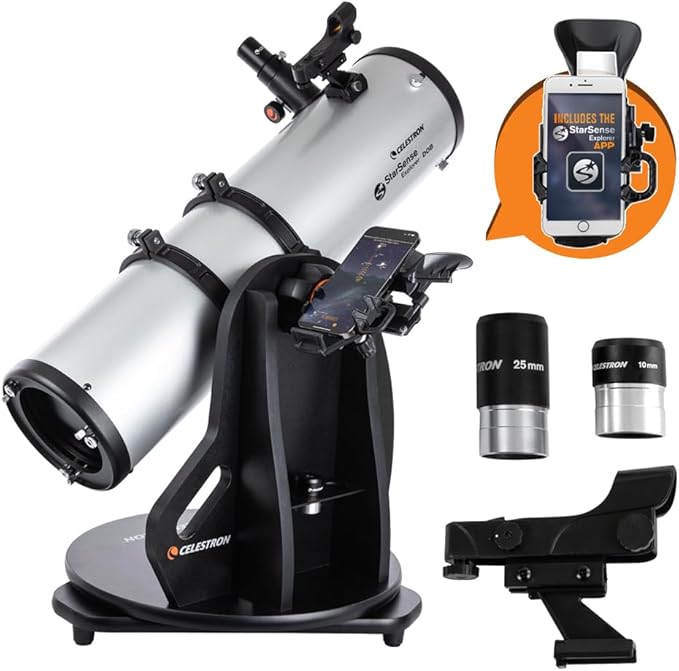
Someone who already knows they will stick with it and wants the most aperture that still fits in a cupboard.
From £399.00
Check price on AmazonNine telescopes from £79 to £599. Specifications are the manufacturer's; prices were read from Amazon on the date above.
| Telescope | Aperture | Focal length | Ratio | Mount | Price |
|---|---|---|---|---|---|
| Travel Scope 70 | 70 mm | 400 mm | f/5.7 | Alt-azimuth on a lightweight aluminium tripod | £78.99 |
| StarSense LT 70AZ | 70 mm | 700 mm | f/10 | Manual alt-azimuth with slow-motion rod | £149.99 |
| StarSense LT 80AZ | 80 mm | 800 mm | f/10 | Manual alt-azimuth with slow-motion rod | £179.99 |
| AstroMaster 130EQ | 130 mm | 650 mm | f/5 | German equatorial CG-3 with slow-motion controls | £199.99 |
| StarSense 114AZ Dob | 114 mm | 450 mm | f/4 | Tabletop Dobsonian, Teflon bearings | £249.00 |
| StarSense DX 130AZ | 130 mm | 650 mm | f/5 | Manual alt-azimuth with dual-axis slow motion | £329.99 |
| StarSense 150AZ Dob | 150 mm | 750 mm | f/5 | Tabletop Dobsonian, Teflon bearings | £399.00 |
| Explorer-150P | 150 mm | 750 mm | f/5 | Equatorial EQ3-2 with steel tripod | £469.00 |
| Skyliner 250PX | 254 mm | 1200 mm | f/4.7 | Floor-standing Dobsonian base | £599.00 |
Full specifications, pros and cons for each model: best telescope for beginners.
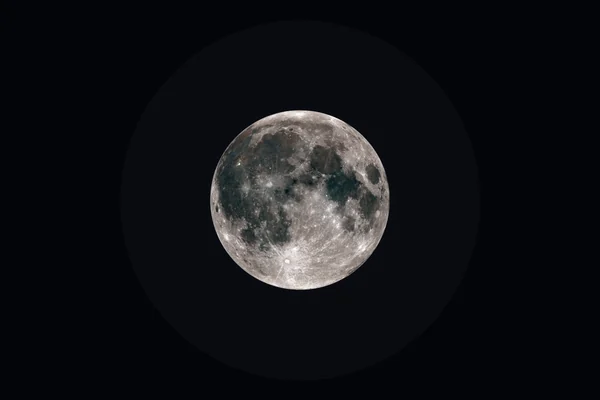
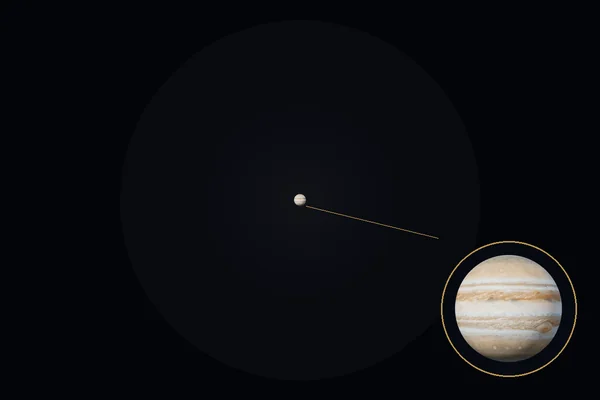
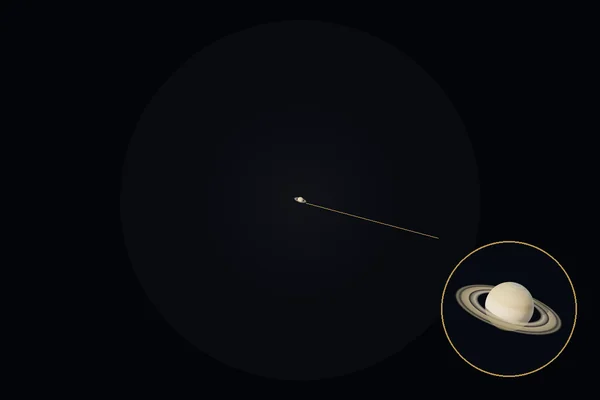
These three images are to scale: the field of view is what a standard eyepiece gives you, and the planet is drawn at the size it appears. Jupiter and Saturn really are that small. The inset shows what the eye can resolve when the air is steady.
Saturn is small, about the size of a pea held at arm's length, but the rings are unmistakable the first time. Jupiter shows two dark belts and up to four moons lined up like beads. The Moon is the best target in the sky and the one people skip.
Everything else — galaxies, nebulae, the spiral arms from the photographs — is grey and faint through a beginner telescope. Not disappointing, just different: it is your eye, at the eyepiece, collecting light that left another galaxy before humans existed.
What 70, 114, 150 and 250 mm really show →
Three options at the awkward price, and why the cheapest is not always the worst.
Where a telescope stops being a compromise: 114 mm on a base that does not shake.
The aperture jump that turns smudges into structure, and whether you need tracking.
Two things matter more than the model. First, where it will live: a telescope you can carry outside in one trip gets used, one that needs two trips does not. Second, your sky: from a lit street galaxies are invisible whatever you buy, while the Moon and planets are excellent.
The seven checks before you pay →
Free tools. If you or your kids like space, there is a 3D simulator to fly to the Moon and eight units of astronomy exercises to print. Simulator and worksheets.