How to choose your first telescope without wasting money
Seven checks, in order of importance. If you only remember one: the mount matters as much as the optics, and it is the part that gets cheapened.
Telescope types
Three designs cover almost everything sold to beginners. The names sound technical; the trade-offs are simple, and one of them wins on value for most people.
Every beginner telescope is one of three designs. Once you can recognise them in a photograph, the marketing on the box stops mattering.
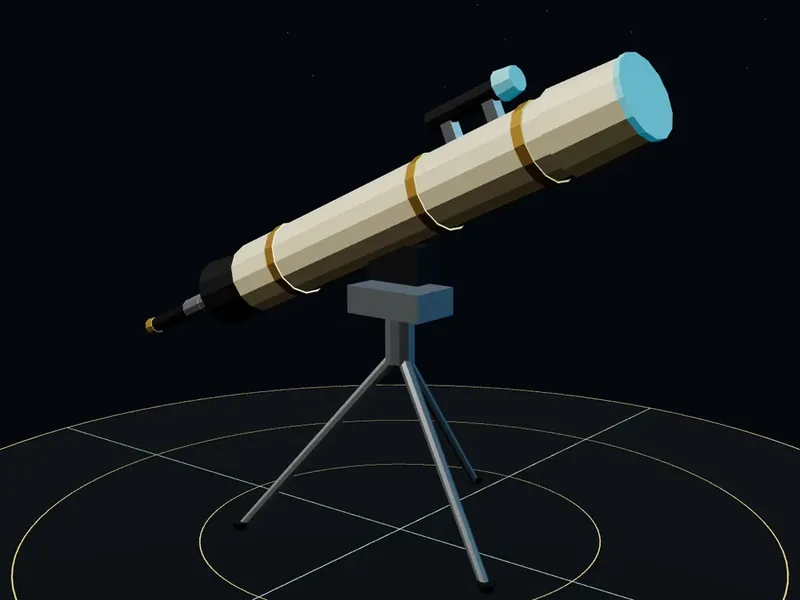
A refractor has a glass lens at the front of a closed tube and the eyepiece at the back. Light goes straight through, nothing inside needs adjusting, and the image is upright — which makes them pleasant for looking at the Moon, planets and terrestrial views.
The trade-off is cost per millimetre of aperture. A lens has to be ground on both surfaces and mounted precisely, so a 90 mm refractor costs about what a 200 mm reflector does. Above roughly 100 mm, refractors become expensive and long.
Good for: a first telescope that never needs fiddling with, birdwatching and daytime use, small flats where a tube lives by the window. Weak at: faint deep-sky objects, because you are paying for glass rather than light grasp.
Cheap refractors sold in supermarkets usually come with a 70 mm lens and a tripod made of thin aluminium. The optics are often acceptable; the mount is what ruins them.
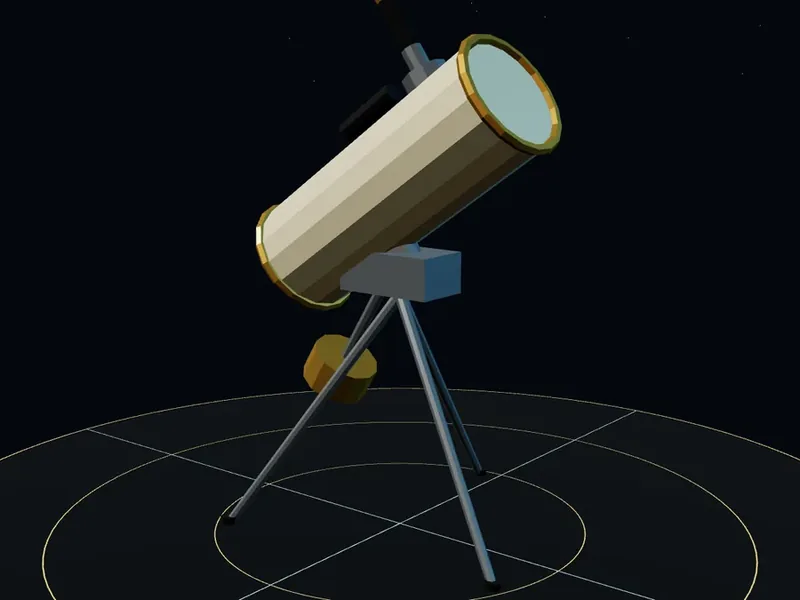
A Newtonian reflector collects light with a curved mirror at the bottom of an open tube and bounces it to an eyepiece on the side. Mirrors are cheaper to make large, which is why almost every "serious" beginner telescope is a reflector.
You give up convenience: the image is upside down (irrelevant for astronomy, odd for daytime), and the mirrors need collimating — aligning them — every so often.
Good for: aperture per pound, planets at high magnification, deep-sky objects from a dark garden. Weak at: nothing important, as long as you are willing to learn one five-minute adjustment.
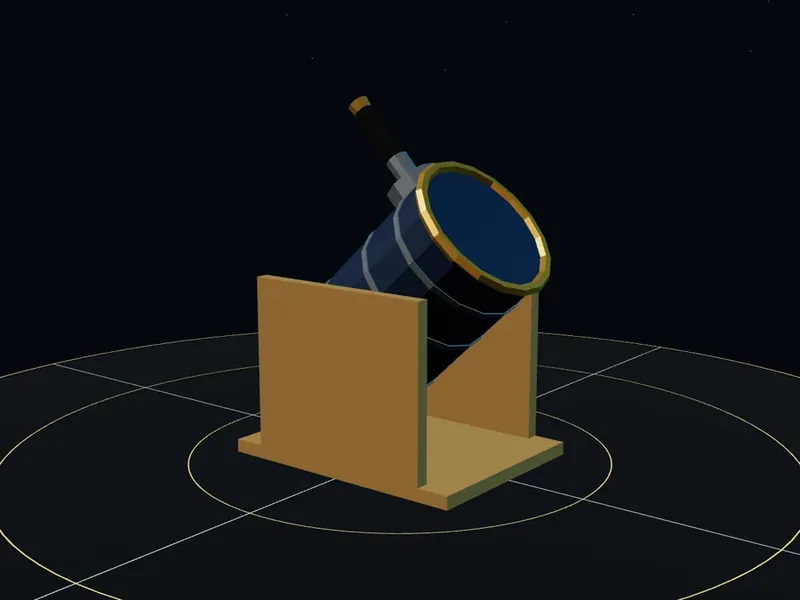
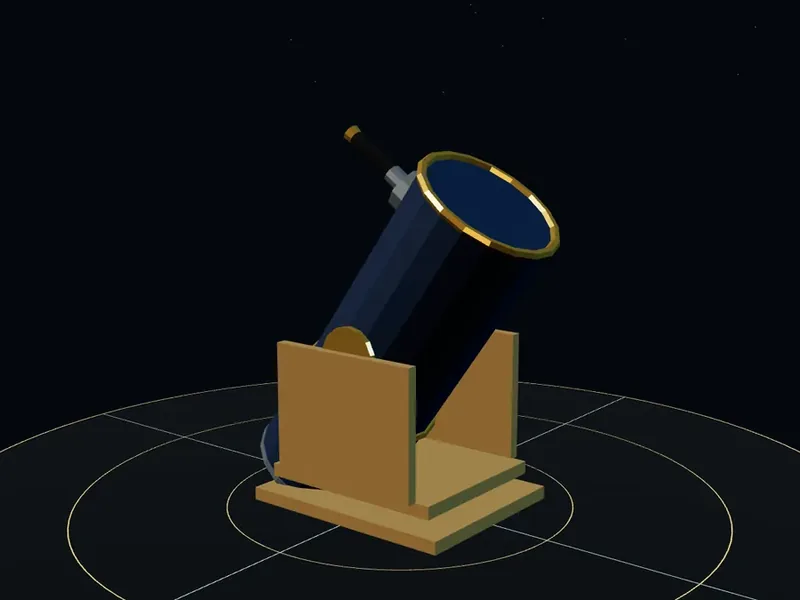
A Dobsonian is not a different optical design. It is a Newtonian reflector on a simple wooden or plywood rocker box instead of a tripod and mount. No motors, no counterweights, no electronics.
That simplicity is why a 200 mm Dobsonian can cost less than a 130 mm telescope on an equatorial mount. You push the tube with your hand and follow the sky by nudging it. At high magnification the object drifts out of view and you nudge again. It sounds primitive; it is how a lot of experienced observers still work.
Good for: the most aperture for the money, the best first "real" telescope, deep-sky observing. Weak at: portability if you buy a large one, and photography beyond the Moon.
You will also see short, stubby tubes sold as Maksutov-Cassegrain or Schmidt-Cassegrain. They fold the light path with mirrors so a long focal length fits in a small body. Excellent for planets and the Moon, easy to carry, and more expensive per millimetre. Fine second telescopes; rarely the best value as a first one.
| Design | Aperture for the money | Setup | Maintenance | Best first buy |
|---|---|---|---|---|
| Refractor | Low | Instant | None | Under 100 mm, for simplicity |
| Reflector on tripod | High | 10 minutes | Collimation | If you want tracking or GoTo |
| Dobsonian | Highest | 2 minutes | Collimation | 130-200 mm, most people |
| Catadioptric | Lowest | Instant | None | Planets in a small flat |
Rule of thumb: if you want the most sky for your budget and do not mind pushing the tube by hand, buy a tabletop Dobsonian between 130 and 200 mm. If you want something that lives on a shelf and never needs adjusting, buy a small refractor and accept that faint objects are out of reach.
A GoTo mount finds objects for you after a two-star alignment. It is genuinely useful in a light-polluted city where you cannot star-hop between constellations, and genuinely frustrating when the alignment fails. The motors and electronics eat a large part of the budget, so a £350 GoTo telescope usually has the optics of a £150 manual one.
Buy GoTo when finding things is your obstacle, not when you are still learning what there is to find.
Seven checks, in order of importance. If you only remember one: the mount matters as much as the optics, and it is the part that gets cheapened.
Every object below is described as your eye sees it at the eyepiece, not as a camera records it. The size of the telescope changes how much detail appears, never the colour of a ph
There is no single best beginner telescope, only the best one for your sky, your space and your patience. These three cover almost everyone, and below them is the whole field from