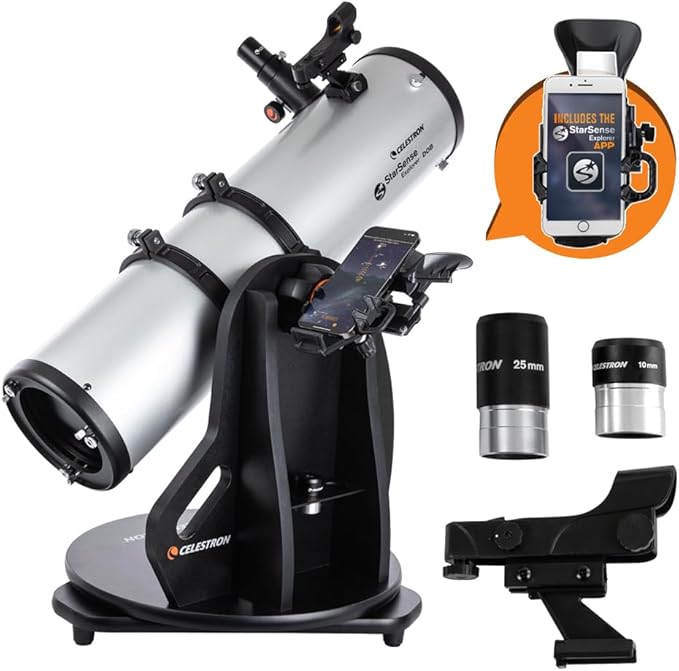
Celestron StarSense Explorer 150AZ Tabletop Dobsonian
Someone who already knows they will stick with it and wants the most aperture that still fits in a cupboard.
From £399.00
Check price on AmazonSerious telescopes
At this price the question stops being "can I see it" and becomes "how much detail". Two 150 mm options, two very different ways of using them.
Someone who already knows they will stick with it and wants the most aperture that still fits in a cupboard.
From £399.00
Check price on Amazon
An observer who wants to study one object for a long time, or who is heading towards photography.
From £469.00
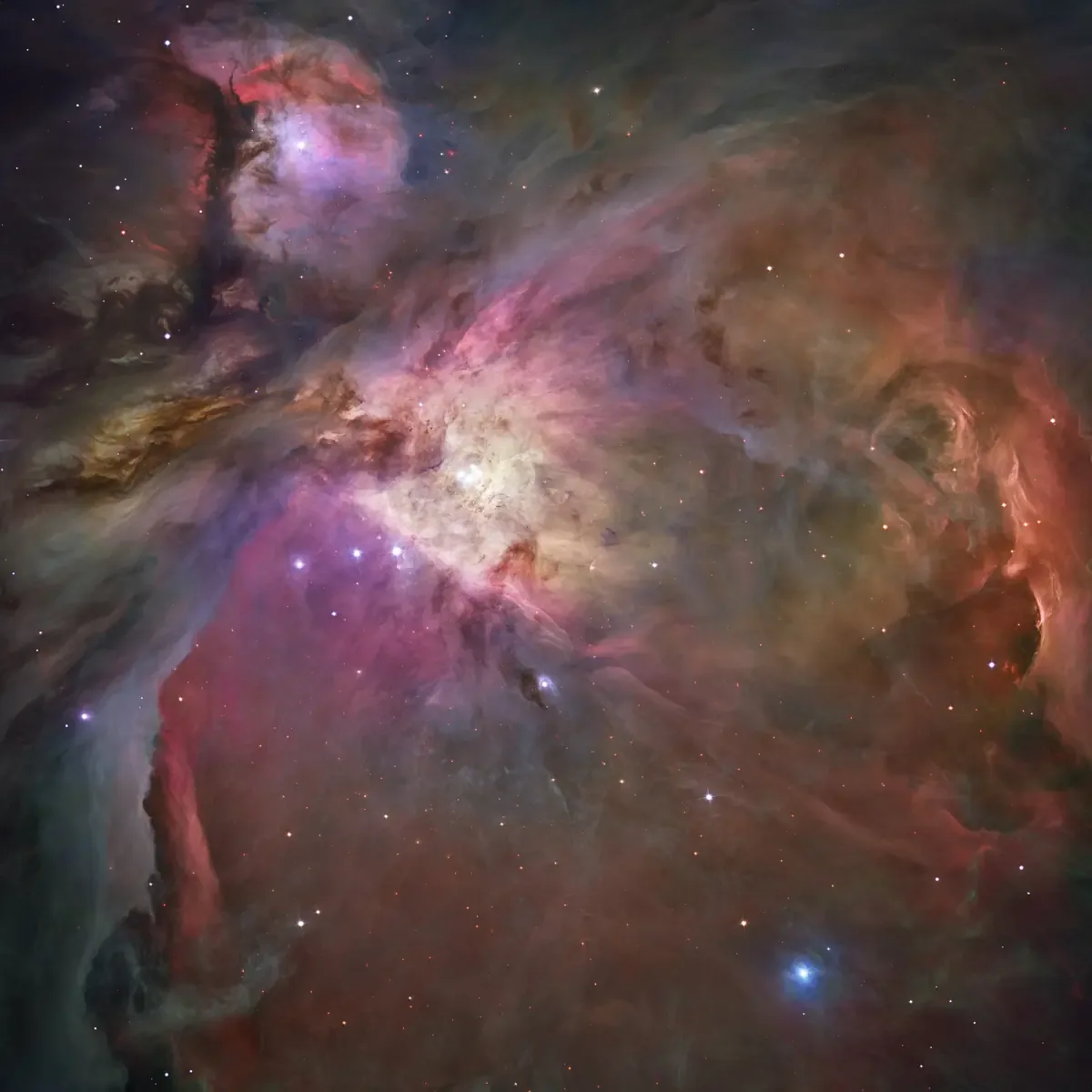
Check price on Amazon150 mm gathers about 75 % more light than 114 mm. That sounds modest; what it changes is the class of object you can see. Globular clusters resolve into individual stars at the edges. Nebulae show structure instead of a glow. The Ring Nebula becomes a ring rather than a dot.
From £399.00
Verdict. The step up that changes what is visible: this is where galaxies stop being smudges and start having shape.
From £469.00
Verdict. The right buy if you know you will want tracking. Otherwise a 150 mm tabletop Dobsonian does the same job for less money and less fuss.
Tabletop Dobsonian — you push the tube by hand and nudge it to follow the sky. Sets up in a minute, nothing to align, nothing to power. The most aperture per pound in the hobby.
Equatorial mount — a counterweighted mount aligned with the Earth's axis, so turning one knob follows the sky. Necessary for long looks and for photography, and a skill worth learning if you plan to stay in the hobby.
At the same aperture, the Dobsonian is cheaper and steadier; the equatorial tracks. Neither is better in the abstract.
Do not skip collimation. A 150 mm reflector that has never been collimated performs like a 90 mm one. It takes five minutes with a Cheshire eyepiece and it is the single biggest free improvement available.
This is the price where a beginner telescope stops being a compromise. Two models stand out, and one of them is the telescope I would buy myself.
A telescope is a complete instrument; the box of extras is usually where the budget disappears. These five change what you see, in this order.
There is no single best beginner telescope, only the best one for your sky, your space and your patience. These three cover almost everyone, and below them is the whole field from