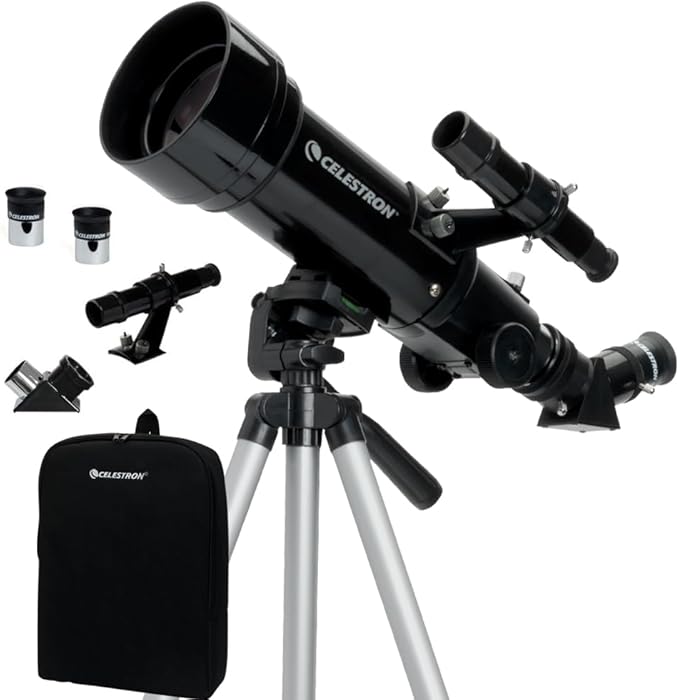
Celestron Travel Scope 70
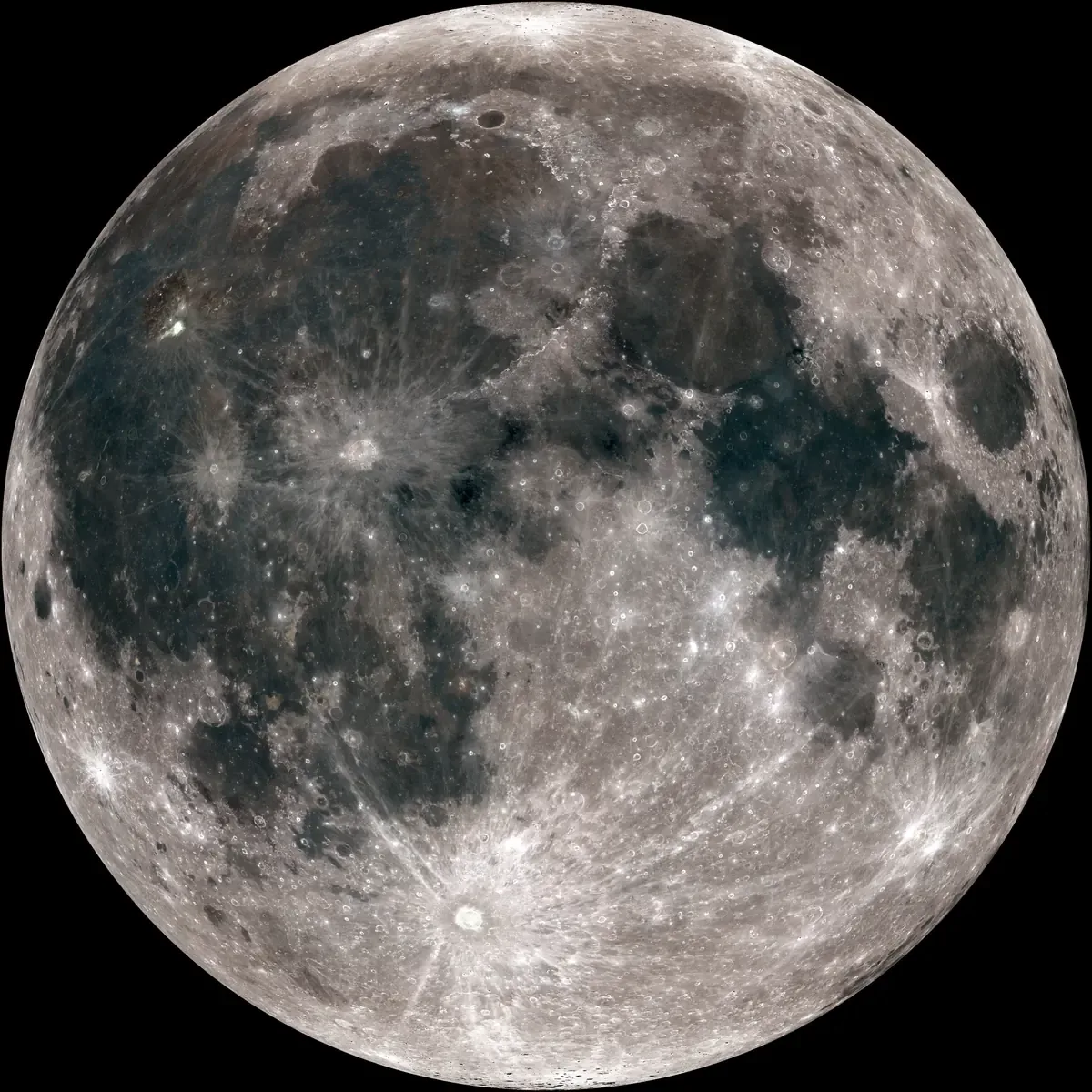
Someone who wants to look at the Moon this week for under £100 and needs the whole kit to fit in a backpack.
From £78.99
Check price on AmazonFor kids
Children do not need a smaller version of an adult telescope. They need something an adult can set up in a minute and that shows something impressive immediately — which usually means the Moon.
The mistake is buying by price instead of by age. A five-year-old and a twelve-year-old need completely different things, and the cheaper telescope is not automatically the more suitable one.
A child of this age cannot aim a telescope at a target and keep it there. Binoculars — 8×40 or 8×42, light enough to hold — show lunar craters, Jupiter's moons and the Pleiades, and they can be used in daylight for birds and aeroplanes.
What makes the difference is an adult outside with them for twenty minutes, pointing at the Moon and naming what they see. A telescope without that is a prop.
This is the age where Saturn changes everything. A 130 mm tabletop Dobsonian shows the rings clearly, needs no batteries, and survives being carried around.
The rule: an adult sets it up and finds the target, the child looks and then tries to find the next one. By the third session most children can point it at the Moon themselves.
A teenager can handle collimation, a star atlas and a 200 mm tube if there is somewhere to store it. A 130 mm Dobsonian is still the sensible starting point; a 90 mm refractor suits someone who prefers planets and does not want maintenance.
Someone who wants to look at the Moon this week for under £100 and needs the whole kit to fit in a backpack.
From £78.99
Check price on Amazon
A child, a beginner, or anyone who wants to learn the sky before buying a telescope.
From £49.88
Check price on Amazon
Most people starting from zero: it sets up in a minute, needs no tripod, and the app finds the targets.
From £249.00
Check price on AmazonFrom £49.88
Verdict. The cheapest way into the hobby that actually works. Point it at the Moon and you will understand why people start here.
From £78.99
Verdict. The entry ticket. It shows the Moon properly and Jupiter's moons as dots, for less than most people spend on a first attempt they never repeat.
Binoculars, a red torch, a free star app and a printed Moon map cost a fraction of a telescope and give a child a real first year of observing. If they are still interested after that, a 130 mm Dobsonian is the natural next step — and by then they will know how to use it.
Printable and interactive exercises on the planets, the Moon and the night sky. Self-checking, works offline.
Safety, in one line: never point any telescope or binoculars at the Sun, and never let a child do it unsupervised. A solar filter must cover the front of the instrument, never the eyepiece.
There is no single best beginner telescope, only the best one for your sky, your space and your patience. These three cover almost everyone, and below them is the whole field from
Every object below is described as your eye sees it at the eyepiece, not as a camera records it. The size of the telescope changes how much detail appears, never the colour of a ph
Seven checks, in order of importance. If you only remember one: the mount matters as much as the optics, and it is the part that gets cheapened.